
Hi, I’m Tony, and I’m one half of the fraut team. Specifically, I’m the technical half! So today I’m writing about the tech side of fraut and how its development came about.
Where I came from
First, a little about my background …
I trained as a doctor in London, and after we did our junior doctor training (or house jobs) it was the norm to go into a specialty pathway. When the time came I told my supervisors that I was interested in the ‘high tech’ aspect of medicine, which at the time was unusual in the UK. They pointed me in the direction of the nuclear medicine and engineering departments; but those weren’t what I was looking for. They didn’t seem technical enough for me!
In the end I opted for a Masters degree in Computer Science which I did at Imperial College London. I had high hopes of landing a job with IBM (my dream job, as back then IBM was the top techy company to work for). But even back then, getting a job in tech was very competitive.
Luckily after a few months I landed a job with EDS Ltd. That was a rival to IBM back then, and it was a reputable multi-billion-dollar company founded by a chap who ran for the president of the USA! EDS was a great company with super training. I worked in the IT health division at the nursing body (known as the UKCC) and ended up back at my old teaching hospital in the IT department as an EDS IT Specialist.
Later I went on to work for Eclipsys Ltd – another excellent healthcare company – on major hospital IT projects including in the north of England (County Durham). It was a great job with lots of foreign travel (no, I don’t mean Durham! my work took me across the US and Europe). I got to do a lot of exciting technical projects including linking several hospital systems together (integration engineering). I also got to work with some great people.
But then things changed.
The UK government was tightening the requirements around doctors developing skills outside medicine. That meant that doctors couldn’t stay out of clinical medicine for long otherwise we would lose our license to practice. So I opted to return to clinical medicine and trained as a GP.
One advantage of being a GP was that doctors could develop a specialist interest – and I hoped to be able to develop a specialist interest in IT. However, being a GP turned out to be a busy enough job! The realities of work and family life meant my IT interest fell into a hobbyist role as there was never enough time to do it all. But I kept tinkering and learning – and in the end that led me to fraut.
Where fraut came from
In the early days of development (a few months ago – though it definitely seems longer!) I was sitting in our headquarters (kitchen) talking to Beth about what we could practically do to help families. Beth came prepared with a notepad and pen and we brainstormed for a bit; and Beth drafted a few designs and asked, ‘can you build an app that does this?’.
I’d dabbled with Kotlin programming and built a few Android apps for fun – but making the leap to a serious bit of software was a big ask, given our day jobs were already busy. I pulled a face and went off to look into it.
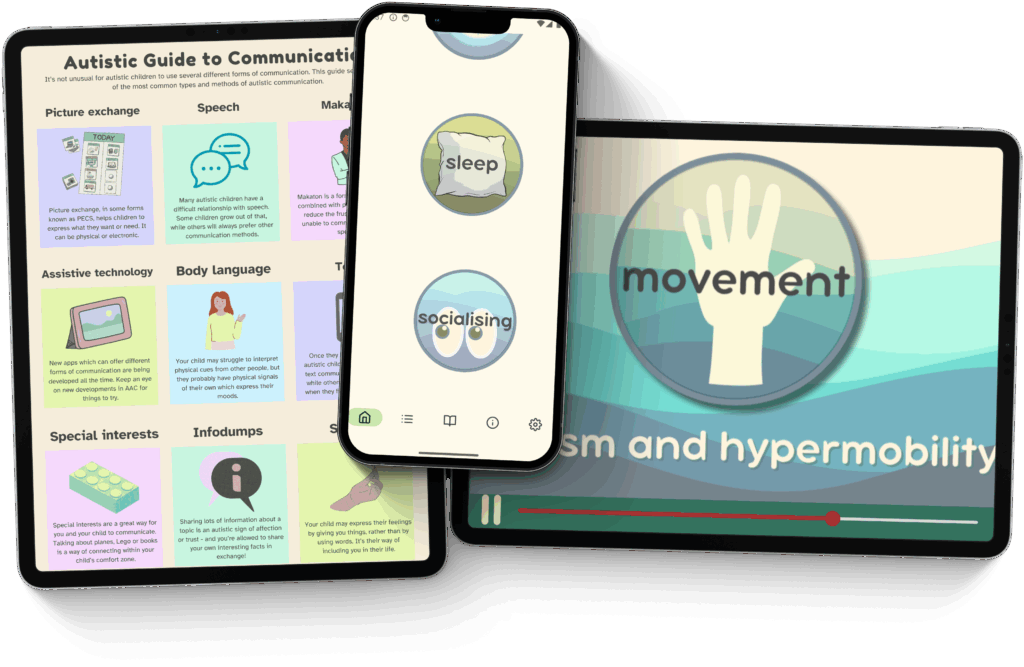
It turned out that Google and JetBrains (developers of Kotlin) had some ambitious plans to push for the holy grail of software development: multiplatform. I was immediately hooked! With multiplatform development, a small team could develop software that should work across several platforms – including Android (phones, tablets, Chromebooks), Windows, Linux, Mac workstations, iOS (Apple phones, tablets) and more (like wearable devices).
Normally, covering all of those platforms would be hugely expensive and time-consuming, and would need a large multi-skilled team. We had no budget, limited free time, and a very small team of only two people, one of whom (Beth!) doesn’t even like computers. It seemed ridiculous: but maybe it could be done…
Over cake and tea I said, ‘ok, let’s do this’.
And so we did. We tackled the Google/Android side first, because that was the hardware we had around the house (old Pixel phones, Fire tablets and a very old and clunky Chromebook). So we were able to build and test early versions on different devices.
But now that the Google version is released, we’re turning our attention to iOS. This is the real test: does ‘multiplatform development’ really live up to the hype?
We’ll soon find out!